Introduction
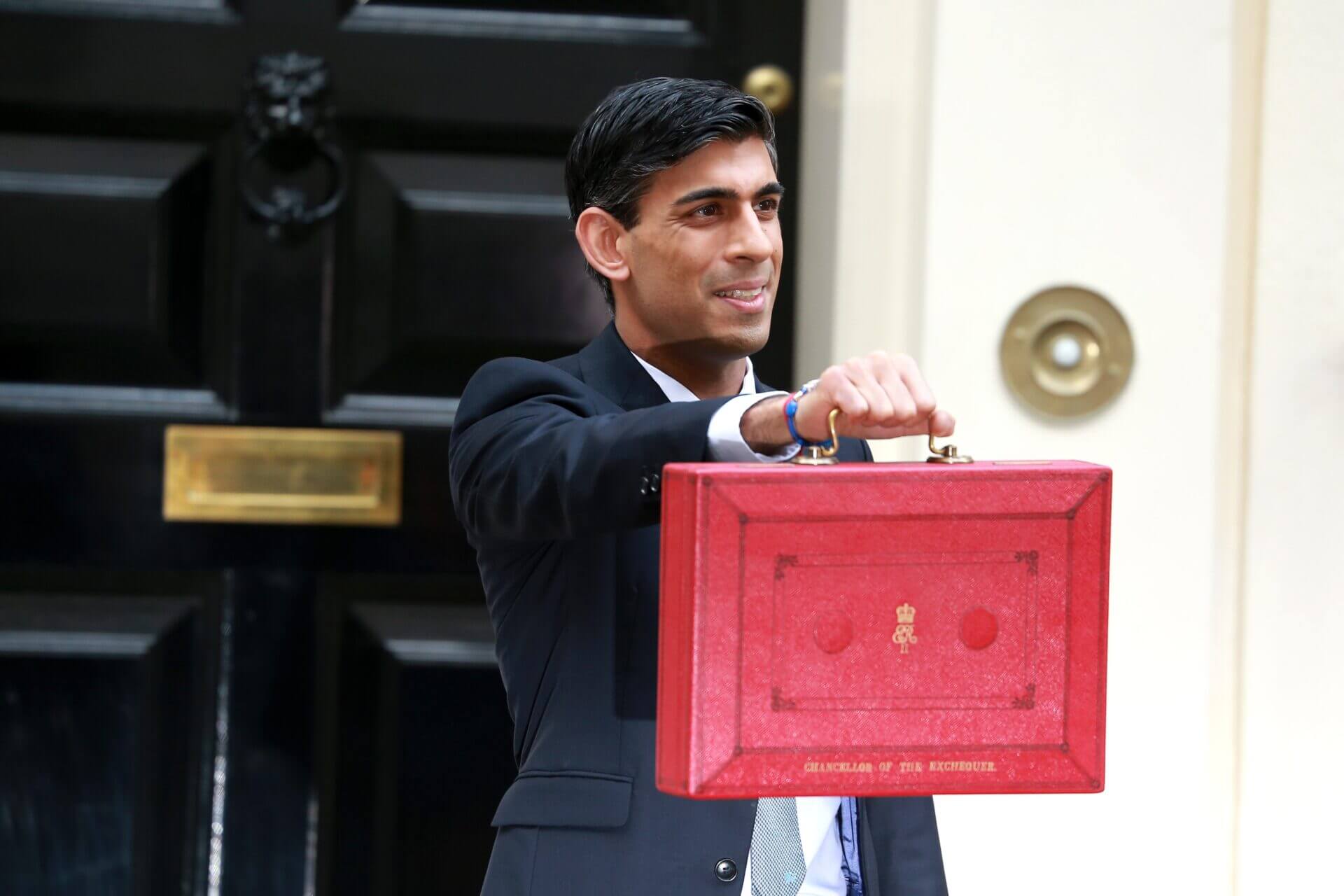
Rishi Sunak said he would be honest with us; an admirable, if sometimes difficult to discern, trait in a politician. He set out further support for businesses and individuals who are suffering financially from the measures taken to defeat the Covid19 pandemic. These measures in various forms will run on to the end of September: by which time we all hope that the economy will be bouncing back rapidly and everyone will be spending the savings we are told we have accumulated over the lockdown period.
The cost of all the support measures will come to some £407 billion, a number so large that most people do not know how many noughts to add to write it out in full. (It’s 9 in case you were not sure). We were reminded, quite rightly, that we will have to repay the amount we have borrowed to fund this support; but not quite yet.
In an ideal world the increase in economic activity in the years ahead would provide the additional tax receipts to repay the debt without having to resort to other measures. However, this will not be sufficient and other measures will be required in due course. No tax increases are happening immediately and so far the only material tax raising announcement is the increase in corporation tax to 25% for companies with annual profits in excess of £250,000. This measure does not take effect until 1 April 2023 and will take a while to produce the desired increase in tax revenue. Nevertheless, the Government estimates that by 2026 this measure alone will bring in an additional £17 billion each year.
The other main tax raising measure announced is the freezing of income tax allowances and rate thresholds from 2022 to at least 2026. Without raising tax rates (and breaching a manifesto commitment in the process) the Government estimates that by 2026 this measure will bring in an additional £8 billion each year.
These are the only significant tax raising measures that have yet been announced and they will be insufficient in themselves to deal with our debt repayment. Whilst it is expected that our economy will grow by 4% this year and 7% the year after and this will result in additional tax being paid, we expect that a more fundamental review of the tax system, which is expected to begin on 23 March, will result in other tax raising measures considered necessary to avoid passing on this debt to the next generation and beyond.
We do of course generally support the measures taken to sustain individuals, families and businesses in what has been an experience that nobody wants to repeat but we are not convinced that today’s Budget goes far enough in raising the funds necessary to pay for it.
In the following pages we provide a summary of the main features relevant to our clients.
Contents
- Stamp Duty
- Covid Relief
- Capital Allowances
- Temporary Extension to Claims for Carry Back of Trading Losses
- Corporation Tax
- Personal Taxes - Rates and allowances
- VAT
- Off-payroll working (IR35 for the Private Sector)
- Freeports
- Withholding Taxes on interest and Royalties
- HMRC- powers, penalties, promoters
- What the Budget did not mention
SDLT Update
Temporary SDLT Holiday Extended
Many purchasers and vendors alike will welcome the news that the current time limited SDLT holiday which was due to end on 31 March has been extended to 30 June. Unlike capital gains tax, which is generally charged on land transactions at the date of exchange rather than completion, SDLT is charged on completion. The current (extended) nil rate band is £500,000 and the extension is designed to ensure that the large number of property transactions which have not yet been finalised can indeed qualify for the increased band.
There will also be an interim SDLT nil rate band of £250,000 between 30 June 2021 and 30 September 2021, after which the nil rate band will return to £125,000 for individual purchasers of residential property.
Higher Rates of SDLT for Certain Buyers
While not announced in the Budget, it is worth remembering the additional rates of SDLT which apply depending on the circumstances of the purchaser(s). Currently, where a second residential property is being purchased and is not a replacement of a main home, the 3% surcharge applies. This applies on top of all rates and means that the first £500,000 of a purchase of a second residential property is charged at 3%.
From 1 April 2021, a second surcharge of 2% will apply to purchases of UK residential property where it is determined that the purchaser(s) is not UK resident at the time of purchase.
The complexity of these surcharges, and determining the residence of the purchaser has not diminished, but a full review of the rules is outside the scope of this section.
COVID 19 Relief Packages
Extension of the Coronavirus Job Retention Scheme
The support offered by the Government through the current Coronavirus Job Retention Scheme since March 2020, allowing employers to furlough employees either fully or partially was due to come to an end on 30 April 2021. However, the Chancellor announced today that this scheme will now be extended until the end of September 2021 providing further support to businesses. Employers will be able to continue to claim 80% of an employee’s wages for the hours they do not work up to a maximum of £2,500 per month.
From July though, the employer will only be able to claim 70%, back from the Government whilst still having to pay the employee 80% meaning the additional 10% will be a cost to the employer. For August and September this contribution from the employer will rise to 20% as they will only be able to claim 60% from the Government.
Further support for the Self-Employed
To continue to support the self-employed across the UK, the Chancellor confirmed that there will be 2 further grants available in addition to the 3 grants offered last year. The first covering the period February 2021 – April 2021 will be worth 80% of three months’ average trading profits and will be paid out in a single instalment, capped at £7,500 in total. This can be claimed from late April and individuals must have filed a 2019-20 Self-Assessment tax return by midnight on 2 March to be eligible for this grant.
The Chancellor also announced that a fifth grant will be made available for the period covering May – July 2021. The amount available will be calculated based on turnover. People whose turnover has fallen by 30% or more will continue to receive the full grant worth 80% of three months’ average trading profits, capped at £7,500. People whose turnover has fallen by less than 30% will receive a 30% grant, capped at £2,850. The final grant can be claimed from late July and we are told more details will follow.
It is also worth highlighting again that these grants do remain subject to income tax and should be treated as income on the individuals’ tax return.
Coronavirus Business Interruption Loans Scheme (CBILS) to be replaced with the Recovery Loan Scheme
CBILS have been available to businesses since March 2020, providing loans and finance of up to £5 million to businesses, with no repayments in the first 12 month as well as the first year being interest free. This scheme is due to close to new applications on 31 March 2021.
However, it was announced today that this scheme will be replaced by the Recovery Loan Scheme. This will give businesses access to up to £10 million in finance with the government guaranteeing 80% of that finance to the lender to ensure the lenders continue to have the confidence to lend.
This new scheme will launch on 6 April and will initially be open until 31 December. The finance may not necessarily be in the form of a loan, it may also be offered as an overdraft or invoice financing.
Finance terms for loans and asset finance facilities will be up to 6 years, and for overdrafts and invoice finance facilities the terms will be up to 3 years.
Restart grants
Businesses that were forced to close due to the pandemic are set to be offered a restart grant of up to £6,000 for non-essential retail businesses and up to £18,000 for hospitality, accommodation, leisure, personal care and gym businesses. We await further detail on how to apply for this grant as well as further detail on eligibility.
If an Employer reimburses an Employee for the cost of home office expenses or testing
Before the first National Lockdown last year, the law provided that if an employee was reimbursed by their employer for home office equipment expenses that reimbursement may be subject to Income Tax and Class 1 National Insurance contributions.
However, due to the current situation forcing millions of us to work from home the government previously announced that any such reimbursements to employees would be exempt from tax and national insurance contributions temporarily until 5 April 2021.
This exemption has now been extended until 5 April 2022. Wherever possible we would suggest the employer still purchases the equipment for the employee though even if it is then delivered directly to the employee’s home address.
Similarly, if an employer reimburses an employee for the cost of a relevant coronavirus test, this reimbursement is also exempt from tax.
Employment taxes
Enterprise Management Incentives (EMI) employee share schemes
In order to qualify for preferential tax treatment, participants in EMI schemes must meet a minimum commitment of 25 hours per week, or 75% of working time. During the coronavirus pandemic, employees may have been furloughed, have worked reduced hours or have taken unpaid leave, resulting in them not being able to meet this committed time requirement.
Finance Act 2020 included an exception to the committed time requirement for employees who are furloughed or working reduced hours due to coronavirus. This exception was due to expire on 5 April 2021. Finance Bill 2021 will include measures to extend the exception to 5 April 2022.
The exception applies to employees with existing qualifying options and employers who wish to issue new EMI share options.
Capital allowances
Super-deduction on investment in plant and machinery
The relief available on investment in plant and machinery will be temporarily increased for expenditure between 1 April 2021 and 31 March 2023. Expenditure incurred on used or second-hand assets and on contracts entered into before 3 March 2021 will be excluded from benefitting.
The relief is in the form of first year allowances at the following rates:
- 130% on qualifying plant and machinery investments that are ordinarily eligible for the 18% main rate writing down allowances (the so-called super-deduction)
- 50% on qualifying plant and machinery investments that are ordinarily eligible for the 6% special rate writing down allowances
Any disposal proceeds on assets on which these first year allowances have been claimed will be treated as taxable profits, rather than reducing the relevant capital allowances pool. Furthermore, a factor of 1.3 will be applied to disposal proceeds from assets on which the super-deduction was claimed.
In addition, there will be transitional rules for expenditure in accounting periods which straddle 1 April 2023.
This, and the temporary increase in the Annual Investment Allowance detailed below, are very generous tax reliefs for businesses investing in equipment. If you are planning to make significant investments in the near future, please talk to us about the timing of these purchases to obtain the maximum tax relief available to you.
Annual Investment Allowance
The Annual Investment Allowance, a form of Capital Allowance, which gives 100% tax relief in the year of acquisition for qualifying plant and machinery, has seen another temporary increase.
The maximum amount of annual allowance available was due to return to £200,000 from 1 January 2021 but the Chancellor today announced a further temporary increase to £1 million until 31 December 2021.
Temporary Extension to Claims for Carry Back of Trading Losses
The Chancellor has announced a temporary extension to the periods in which it is possible to carry back trading losses to, in order for businesses to gain tax relief earlier in respect of losses made now, by offsetting those losses against profits in the prior three years. A similar measure was introduced for a two year period following the 2008 financial crisis so the Chancellor did not have to look very far to reinvent the wheel here.
Companies (Relief for Corporation Tax)
The extension is available for Corporation Tax loss relief for companies making trading losses.
Ordinarily trading losses are normally only available to carry back against profits arising in the previous 12 months (unless the company has ceased to trade in which case this period is extended to 36 months).
Under the announced extension, trading losses incurred in accounting periods ending in the period 1 April 2020 to 31 March 2022 will be available to carry back and offset against profits from the same trade arising in the previous three years on a ‘last in, first out’ basis.
There will be a limit on the amount of losses that can be offset in the ‘extra’ two years, of £2 million per loss generating period ending between 1 April 2020 and 31 March 2022. The limit will be a group-wide limit and groups will need to apportion this between group companies. Given the flexibility available for offsetting losses within a corporate group, careful planning may be required to ensure maximum loss relief is obtained in a group scenario.
Unincorporated Business (Relief for Income Tax)
Unincorporated businesses such as sole traders and partners/members in partnerships and LLPs will benefit from accelerated income tax relief for trading losses made in the 2020/21 and 2021/22 tax years.
These losses will again be available to carry back against trading profits arising in the previous three tax years, with a £2million limit again applying to the ‘extra’ two tax years available due to the extension.
Individuals subject to income tax are also able to offset trading losses against their total net income in the current and preceding tax year, and this offset will remain and will still be subject to the current limits that apply, being broadly the greater of £50,000 and 25% of the individual’s adjusted total income.
It is also worth remembering that sole traders and partners who have made losses in their first four years of trade can carry these losses back against net income of the three preceding tax years on a ‘first in, first out’ basis as well. The interaction of the various loss reliefs available will need to be carefully considered when completing 2020/21 and 2021/22 tax returns.
Corporation Tax
Rate
The Chancellor announced today that, as had been speculated, the corporation tax rate will increase from 1 April 2023 to 25% for businesses with profits exceeding £250,000. A small profits rate will be introduced for companies with profits of £50,000 or less, set at the current rate of corporation tax, being 19%. Companies with profits between £50,000 and £250,000 will pay tax at a marginal rate between 19% and 25%, depending on profits.
In addition, the rate of Diverted Profits Tax will increase from the current rate of 25% to 31% from April 2023. This tax targets corporates who “in effect” trade in the UK but deliberately avoid having any sort of taxable base here, and only applies to larger businesses, with annual sales to the UK exceeding £10million.
Personal Taxes - Rates & Allowances
It perhaps came as no surprise, given all of the financial help that has been made available to taxpayers over the past year and that will continue for many taxpayers until September 2021, that the Chancellor warned there would have to be measures put in place to start collecting monies back into the UK coffers to pay off the country’s huge borrowings. That said, in today’s Budget, the only announcements that impact personal taxes were as follows:
- Income tax and national insurance rates will not rise*
- The following will be frozen from April 2021 to April 2026:
- Tax-free personal allowance
- The higher rate tax income tax threshold
- The inheritance tax nil rate bands
- The Lifetime Allowance for pensions
- The capital gains tax annual exemption
* Note that for Scottish income tax payers, tax rates applying to non-savings and non-dividend income are set by the Scottish parliament, so this may differ.
The Chancellor pointed out that this meant that there would be no change to take-home pay for individuals from 2021/22 onwards; however, this does not consider the impact of any rises in the cost of living which will have a negative impact.
You may have noticed what was perhaps careful wording on the Chancellor’s part – whilst he states that income tax and national insurance rates will not rise, he does not say the same for inheritance tax or capital gains tax, nor does he mention whether there will be changes to the various inheritance tax, capital gains tax and pension contribution reliefs available. It remains to be seen whether there will be something further on these areas when consultation documents are released later this month. We will of course provide an update once we know more!
Table of tax allowances and thresholds from 6 April 2021
We have set out below a table of the allowances and thresholds that will be frozen from 6 April 2021 to 5 April 2026:
| 2020/21 | 2021/22 to 2025/26 | |
| Income tax: | ||
| Personal allowance | £12,500 | £12,570 |
| Basic rate tax limit | £37,500 | £37,700 |
| Higher rate tax threshold | £50,000 | £50,270 |
| Additional rate threshold | £150,000 | £150,000 |
| National Insurance: | ||
| Upper Earnings Limit (employees) | £50,000 | £50,270 |
| Upper Profits Limit (self-employed) | £50,000 | £50,270 |
| Inheritance Tax: | ||
| Nil rate band | £325,000 | £325,000 |
| Residential nil rate band | £175,000 | £175,000 |
| Residence nil rate band taper | £2 million | £2 million |
| Pension contributions: | ||
| Lifetime Allowance | £1,073,100 | £1,073,100 |
| Capital gains tax: | ||
| Annual exemption | £12,300 | £12,300 |
Social Investment Tax Relief
Social Investment Tax Relief (SITR) was introduced in 2014 and designed to enable social enterprises to obtain external investment from individuals. The individuals are then able to claim income tax and CGT reliefs on their investment. Originally the SITR scheme was due to come to an end in April this year; however, this has now been extended to April 2023.
VAT
In a budget with very few changes, VAT has seen more than its fair share of tweaks to the system. We have highlighted below the key point.
VAT Payment Deferral Scheme
- Approximately 600,000 businesses took advantage of the original deferral of VAT due on VAT returns from 20 March 2020 through to the end of June 2020. If you are one of these businesses you can now opt to use the VAT Deferral New Payment Scheme to pay that deferred VAT in up to eleven equal payments from March 2021, rather than one larger payment due by 31 March 2021. Businesses can sign up to the scheme here - VAT Payment Scheme
- Care should be taken to ensure that if you have deferred your VAT, you now either sign up to the new scheme or settle your outstanding liability by 31 March 2021, in order to avoid a 5% penalty being applied to the outstanding balance.
Hospitality, holiday accommodation and attractions rate
- In response to the effect of Covid-19 on certain sectors, a previous VAT rate reduction that was due to expire relating to certain goods and services supplied by the tourism and hospitality sector has been extended until 30 September 2021. This will remain at 5% until September, at which point it will rise to 12.5% until 31 March 2022. From 1 April 2022 it is then expected to return to the standard rate of VAT at 20%.
VAT Registration Limit
- The Chancellor has stated that the current threshold of £85,000 will not be changing until at least 31 March 2024. It is important to remember that this threshold can include overseas purchases and you need regularly to ensure you do not inadvertently exceed the limit. There are some categories of supply where there is a nil VAT registration limit.
Making tax digital (MTD)
- From April 2022, the government will be extending the MTD scheme to smaller businesses (including the self-employed and landlords) following the successful implementation in 2019 for larger businesses. This will affect VAT registered businesses with taxable turnover below the current VAT threshold that are not currently required to operate MTD for their VAT reporting and record keeping obligations.
- Under MTD, businesses must keep digital records and use third-party software to submit their tax returns to HMRC. The changes mean that those who do not already keep their records digitally will need to start doing so to comply with VAT legislation.
VAT on electronic publications
- During the Budget in 2020 it was announced that supplies of electronic publications that are the electronic equivalent of zero rated books, journals, etc, would be zero rated from 1 December 2020. As a result of the pandemic the government brought this date forward to 1 May 2020 and if you supply this type of service you should review your systems to ensure the correct rate of VAT is being charged. If you require any assistance in determining the VAT rate of your product lines, please do get in touch.
Off-payroll working (IR35) for the Private Sector
It has been confirmed that the Government will be going ahead with the proposed changes to off-payroll working for the private sector from 6 April 2021. New rules were introduced in the public sector a few years ago and now this is being rolled out to the private sector, having been delayed from its original planned start date of April 2020.
Off-payroll working, commonly known as IR35, is the term used by HMRC for contractors that should potentially be paid through the payroll as an employee. The system aims to ensure that individuals who work like employees and provide a service to another person or company through an intermediary, such as their own limited company, pay the same tax and National Insurance Contributions as employees. The rules apply to regard the worker as an employee providing their services directly to the business.
In short, if a business currently has a sub-contractor working for them and they invoice for their services through a company, the organisation will need to assess whether or not that individual would actually be deemed to be an employee through the Government’s employment checker. If they are, then the organisation will need to deduct income tax and national insurance from payments made to them as they would for an employee.
This is expected to have a big impact on many individuals acting as sub-contractors through their own service companies.
If you think you may be affected by this and have not taken action already we would advise you to get in touch as soon as possible.
Freeports
The Chancellor has announced that he will be creating 8 new Freeports where businesses will benefit from more generous tax reliefs and simplified customs procedures, bringing investment, trade and jobs to the UK economy with the 2 local Freeports to us being in Thames and Solent with Freeports also being setup in Liverpool, Teesside, Humber, East Midlands, Felixstowe and Harwich and Plymouth and South Devon. It is expected these sites will begin operating in late 2021.
Tax sites
The creation of these specific Freeports will include areas denoted as “tax sites”. Within these areas businesses will be able to obtain the following tax reliefs:-
- An enhanced 10% (instead of the current 3%) rate of Structures and Buildings Allowance for constructing or renovating non-residential structures and buildings brought into use by 30 September 2026.
- An enhanced capital allowance of 100% for companies investing in plant and machinery for use in Freeport tax sites up until 30 September 2026.
- Full relief from Stamp Duty Land Tax on the purchase of land or property within Freeport tax sites in England up until 30 September 2026.
- Full Business Rates relief in Freeport tax sites in England for all new businesses, and certain existing businesses where they expand, until 30 September 2026. Relief will apply for five years from the point at which each beneficiary first receives relief.
- Employer National Insurance contributions relief available for eligible employees in all Freeport tax sites from April 2022 and may be extended for up to 10 years if given approval.
SDLT Relief
A relief will also be legislated to incentivise investment into freeport tax sites. Details of the relief have not been published, and in response to consultation comments there will be safeguards to ensure that the relief is only given where land and buildings are used in a certain way and for certain purposes.
Withholding Taxes on Interest and Royalties
Following Brexit, legislation which enabled companies resident in EU member states to benefit from UK withholding tax exemptions on the payment of annual interest and royalties from connected UK resident companies will be repealed, as the UK no longer has an obligation to provide this relief.
This will apply to annual interest and royalty payments made on or after 1 June 2021 and will mean that companies in the EU will no longer receive favourable treatment compared to companies based outside the EU. Instead, withholding taxes will apply based on the double taxation agreements in place with other jurisdictions.
The repeal of this legislation may add additional complexities to what may have previously been straightforward loan arrangements with connected parties.
UK companies currently paying annual interest and royalties to connected parties in the EU should review their agreements to understand their withholding tax obligations from 1 June 2021
Overseas companies receiving annual interest from a connected UK company may need to apply to HMRC to benefit from a treaty rate of withholding tax (if one is available for the country in question and this is lower than the headline withholding tax rate of 20%), or may benefit from applying under the Double Taxation Treaty Passport Scheme if applicable.
Please get in touch if you require a review of your cross-border loan arrangements, as this can be a particularly complex area of taxation.
HMRC – Powers, Penalties and Promoters
Financial Institution Notices
HMRC accessing financial information on taxpayers as part of an enquiry currently requires Tribunal approval if it comes direct from the bank or building society. In addition, there are exchange of information requests from other countries which take time for HMRC to process. The introduction of a new type of notice which does not require Tribunal approval will cut the time it takes for HMRC to acquire this information. Time will tell if the balances put in place to prevent the notices being used inappropriately are adequate.
Reporting for Digital Platforms
Tax information and powers need to keep pace of the continuing digital revolution, and the ability of HMRC to gather data from online sources needs to keep pace with this.
Details are not yet available, but essentially HMRC will be given the power to require digital platforms and those who provide services through digital platforms in the UK to provide information about the income of sellers of services on their platforms.
Late Filing Penalties
With Making Tax Digital (MTD) slowly making its way across the taxes, HMRC are looking to harmonise the penalty systems. Initially, the harmonisation will apply to income tax and VAT. The first group to whom the changes apply are VAT customers – the rules will take effect for accounting periods beginning on or after 1 April 2022.
Late filing penalties will move to a points-based system. There will be a £200 penalty for late compliance only after the taxpayer has reached a certain number of points, based on the frequency of the reporting obligation.
- Annual – 2 points
- Quarterly – 4 points
- Monthly – 5 points
Once the threshold has been met, points can only be reset by catching up with prior non-compliance and by demonstrating a period of compliance, again determined by the frequency of the submissions.
The gradual introduction of these rules will hopefully help both taxpayers and HMRC get to grips with the changes, which have their own set of complications and challenges – especially for taxpayers with more than one type of compliance obligation, or where the obligation frequency changes.
Late Payment Penalties and Interest
While the points-based system for late filing will be more familiar to VAT taxpayers than to self assessment taxpayers, the late payment and interest regime will be a greater change for VAT taxpayers.
Again, for accounting periods starting on or after 1 April 2022, VAT taxpayers will be subject to the new rules, with the rules coming into force for landlords and self assessment taxpayers respectively in the following two years.
Late payment interest will be charged on a simple 2.5% + BoE base rate. Overpayments will attract interest at the BoE base rate less 1% (subject to a minimum rate of 0.5%).
Penalties on late payment of tax will accrue on day 15 (at a rate of 2%) and day 30 (at a rate of 4%) after the payment due date. Thereafter, a daily penalty at an annual rate of 4% (separate to the late payment interest) will accrue.
HMRC indicate that there will be a light touch approach, particularly as the new rules are introduced, on the initial 2% penalty.
Tackling Promoters of Tax Avoidance
Following the conclusion of the consultation on tackling promoters of tax avoidance, Government is planning to proceed with drafting legislation which will strengthen HMRC’s powers. Such powers are of course necessary to tackle abusive behaviour, and we very much hope that they will be used in the spirit intended.
We also see a role of HMRC working more collaboratively with companies and professional bodies regarding their own disciplinary procedures for an effective deterrent for companies and individuals taking an abusive stance on such matters. We await the detail of the legislation when Finance Bill 2021 is published.
What the Budget did not mention….
The changes to taxation announced today were probably more modest than most commentators have been discussing for the last 2 weeks. There is however another announcement being made on 23 March regarding future tax policy, alongside various consultation documents yet to be announced, so we are still expecting rather more far-reaching measures to come at some point.
We already know that Making Tax Digital (MTD) is being extended in stages over the next few years and many commentators have already pointed out that having a tax year ending 5 April is inconsistent with a smooth transition to digital reporting, as well as being out of step with just about every other country. Do not be surprised if a change is proposed to move to a calendar year or 31 March year end reporting basis before too long.
A Wealth Tax has been the subject of a recent report, and much subsequent discussion, as a potential means of reducing the Covid19 related debt. A one-off imposition spread over 5 years has been suggested as a possible means to enable the better off to contribute to the overall debt reduction plan. We are watching this space with interest, though the prospect of a wealth tax was notable by its absence in today’s speech.
A number of organisations have proposed reforms to Capital Gains Tax (CGT) and Inheritance Tax (IHT) which are claimed would reduce complications and unfairness in the current regime whilst increasing the overall tax take as a result. The suggestions include:
- Raising the rates of CGT and reducing the number of different rates
- Abolishing the CGT uplift on death when no IHT is paid due to other reliefs
- Replacing Business Asset Disposal Relief with a retirement related relief
- Share based remuneration and accumulation of retained earnings in owner-managed companies to be taxed as income rather than capital
Bearing in mind the relatively small contribution that these two taxes make to the Exchequer, the costs of administration and collection are the most expensive relative to the tax receipts generated.
A new way of thinking….
By the far most eye-catching report, however, was only issued 2 days ago. This was produced by the Institute of Economic Affairs and is entitled:
20 Taxes to Scrap: How to grow the UK economy by simplifying the tax system
In summary the paper claims that the five-year average tax burden in the UK is now at a 70 year high and if the specified 20 taxes were scrapped, or significantly changed, these reforms would simplify the tax system, reduce the overall burden of taxation and eliminate many harmful distortions that stifle the UK’s productivity and prosperity. The resultant economic growth will more effectively tackle the national debt than increased taxation. The report goes on to claim that the constant tinkering with the tax code (which has tripled in size since 1997) has over-complicated the tax administration process and distorted the rationale behind the original reasons for the introduction of many of these taxes.
The taxes proposed for scrapping are:
- Inheritance Tax
- Capital Gains Tax
- Stamp Duty Land Tax and Stamp Duties on buying shares
- Apprenticeship Levy
- Vehicle Excise Duty
- Bank Surcharge
- Duties on alcohol, tobacco and gambling
- TV Licence
- Air Passenger Duty
The taxes proposed for amalgamation or reform are:
- Council Tax, Community Infrastructure Levy, Business Rates and Affordable housing and other s106 obligations
- Climate Change Levy and renewables obligations
- Corporation Tax and Diverted Profit Tax
The report makes fascinating reading and claims that the opportunities of Brexit coupled with the need to revitalise the economy in the wake of the Covid 19 crises provide a good time for the government to embark on a dramatic and tax-cutting programme. We shall have to wait until 23 March to see if the government is brave enough to consider anything quite so radical.
CHARTER TAX CONSULTING LIMITED
11 ST JAMES'S PLACE
LONDON
SW1A 1NP
3 March 2021
Disclaimer
The information provided by Charter Tax Consulting Limited is general in nature and does not constitute specific tax advice. Professional advice should be sought before deciding on a course of action, or refraining from a certain action, arising from the above information and we will be happy to assist in providing such advice. Tax legislation changes regularly and the information contained herein is provided based on legislation as at 3 March 2021. Taxation planning concerns the application of complex statute and case law to future events. Accordingly, however expert the opinion given, it is always possible that the Courts will take a different view of the application of the law. We undertake to apply reasonable care and skill in the provision of advice. We do not guarantee that tax planning steps will in all circumstances achieve a certain legal effect.